

Your staircase sits in the first room every visitor walks into, and in most UK homes it has not changed since the day the house was built. Chipped white spindles, a rounded handrail in a wood tone that no longer matches anything else, a newel post with a mushroom cap on top.
Here is the useful part. The structure underneath is almost always fine. The treads, the strings and the framing are doing their job. What dates a staircase is the balustrade you can see and the surfaces you touch, and those can be changed without pulling anything out.
The staircase ideas below are grouped by how much of the staircase they actually change, starting with the ones that make the biggest difference. For each one you will find a note on what it costs and whether it is something you could take on yourself.
Three things decide which idea suits your house, and none of them are about taste.
The first is the condition of what you already have. Spindles that are solid but dated are a different problem to spindles that wobble. The second is light. Hallways and stairwells are usually the darkest part of a UK home, and some of these ideas add light while others absorb it. The third is what you are willing to spend, which is worth settling before you start browsing rather than after.
It also helps to know which category a change falls into:
If you are not certain what each component is called, it is worth reading through the parts that make up a staircase before you go any further. Knowing a base rail from a string makes every quote you receive easier to read.

The balustrade is the part of your staircase you see from every angle in the hallway. Change it and the whole space reads differently. These are the ideas that deliver the largest visual shift for the work involved.
Replacing spindles with glass is the single biggest change you can make to a hallway without moving a wall.
Timber spindles create a visual barrier. Roughly thirty vertical lines between your hallway and your landing, each one blocking a slice of light and sight. Glass removes that entirely. Light from a landing window travels down into the hall, and a narrow hallway reads noticeably wider because your eye is no longer stopped short.
It suits period homes better than most people expect. Glass is visually neutral, so it does not argue with original features the way a strongly styled timber spindle would. In a Victorian terrace with a dark hall, it often does more good than it does in a new build.
The structure stays where it is. Your newel posts and the run of the balustrade are unchanged. The infill between the handrail and base rail is what gets replaced, which is why this can be done as a refurbishment rather than a rebuild.
Two things to check on any glass balustrade kit you look at: the glass should be toughened safety glass, and the edges should be properly finished rather than raw cut.
Not everyone wants a transparent balustrade, and glass is not the only modern option.
Oak rails paired with slim steel spindles give you a contemporary look while keeping timber in the room. The combination reads as modern because of the material contrast and the thinner profile, not because it strips anything away. Warm wood against brushed metal.
This works particularly well in homes that already have oak somewhere in the hallway, whether that is flooring, internal doors or a kitchen beyond. It picks up what is already there instead of introducing a fourth material.
Square rail profiles read more modern than rounded ones, and the difference is more noticeable than it sounds when you are looking at fifteen metres of handrail. Both are available across the spindle balustrade options, so it is worth deciding on profile before you decide on finish.
This is the smallest balustrade change that still looks like a proper update rather than a touch-up.
It makes sense when your spindles are sound and reasonably plain, but the rails are the wrong profile or the wrong colour. A chunky rounded 1980s handrail can date an otherwise unremarkable staircase all by itself. Swap it for a square profile and the same spindles suddenly look intentional.
It makes less sense when the spindles are the problem, because a new rail sitting on tired spindles draws attention to them. Working out whether spindles alone are enough is worth doing before you order anything, since the cost gap between the two approaches is smaller than most people assume.
Some staircases have a solid panelled side rather than an open balustrade, usually where the stairs run along a wall or where a previous owner boxed them in.
Opening this up exposes the treads and turns a corridor into a feature. It is the most dramatic change on this list.
It is also the only idea here that is properly structural. The closed string may be carrying load, and once it is off you need a new balustrade built to current regulations along the exposed edge. This is a joiner’s job, and depending on the staircase it may need building control involvement. Worth knowing about, but not a weekend project.
Not every update needs to touch the balustrade. If your spindles and rails are in good condition and the staircase simply looks tired, these staircase ideas on a budget will shift the look for considerably less. If cost is the main constraint driving your project, there is more detail in our guide to lower-cost ways to renovate stairs.
Two-tone painting is the most common staircase update in UK homes, and when it is done properly it lasts.
The usual approach is white or off-white spindles against a darker handrail and newel post, or the reverse in a lighter hallway. Greys, greens and near-blacks all sit well against white spindles. Painted spindles with a natural oak handrail is a combination that has stayed popular because it works in almost any hallway.
Preparation decides whether the finish survives contact. Existing varnish has to be sanded back properly, not just scuffed. A stain-blocking primer goes on next, which stops knots and old stain bleeding through months later. Then two topcoats.
Most paint failures on staircases come from skipping the primer, because a handrail gets touched dozens of times a day and thin paint gives up quickly. Our guide to preparing and painting stair spindles covers the full sequence.
Panelling changes the staircase without touching the staircase.
If your balustrade is fine but the hallway feels flat, running panelling up the stairwell wall adds depth and breaks up a large blank surface. Simple square or rectangular batten panelling suits most UK homes. It is fitted to the wall rather than the stairs, which keeps it a genuinely low-risk job.
A staircase looks different at night, and most are lit by a single ceiling fitting doing all the work.
Wall lights running up the stairwell, a pendant dropping through the void, or low-level step lights all change how the staircase reads after dark. Step lighting has a practical benefit alongside the visual one, since it marks the edge of each tread without needing the main light on.
Any new wiring needs a qualified electrician. Plug-in or battery options exist if you would rather not open up walls.
A runner over painted or varnished treads is a lower-cost alternative to carpeting the full staircase, and it lets the timber at the edges stay visible.
It also hides wear on treads that are structurally fine but scuffed. Held down with stair rods, it becomes a design feature rather than a cover-up.
This is the question that stops most people, and it deserves a specific answer rather than a reassuring one.
For a balustrade refurbishment kit, the honest version is this. Two people, standard hand tools including a drill and a screwdriver, and most straight staircases are done inside a day. A staircase with a landing and a turn takes longer, and it is sensible to plan for a weekend rather than an afternoon.
What makes it achievable is that the work is assembly rather than joinery. Components arrive cut to your measurements with fixing positions already set, so you are not cutting angles on site.
The part that worries people most is measuring. It is a fair worry, because a made-to-measure kit is made to whatever numbers you supply. Which is why measuring is not left to you alone: you can send photographs of each section for an estimate, or book a video call and have someone walk through the measurements with you while you hold the tape. Our step-by-step guide to measuring for a balustrade kit covers the same ground in written form.
Where the line sits, plainly:
If you would rather not do it yourself, the kit still costs the same and you are only paying a fitter for a day’s labour instead of a full supply-and-fit project.
Anything that acts as a barrier on your stairs or landing is covered by UK building regulations, so it is worth knowing the basics before you choose.
Approved Document K sets the minimum height for balustrades on domestic stairs and landings, and limits the size of any gap so that a small child cannot pass through it.
Two standards come up when glass is involved. BS 6180 covers barrier loading, meaning how much force a balustrade must withstand. BS EN 12150 covers toughened safety glass.
Replacing components like for like generally does not require approval. Changing the design of the balustrade may do, particularly if you are altering heights or opening up a previously closed side. Our page on UK staircase safety regulations goes into more detail, and your local building control team can confirm anything specific to your property.
Painting the spindles, newel posts and handrail is the lowest-cost option, and with proper preparation it holds up well. A stair runner over the treads is the next step up. Both leave the balustrade structure untouched, so neither involves building regulations.
Yes, and in most UK homes that is the sensible route. The structural elements of a staircase usually outlast the visible ones by decades. Replacing the balustrade alone changes what you see and touch while leaving the treads and framing in place.
Replacing like for like generally does not require approval. Changing the design, the height or the type of infill may do, especially if you are opening up a closed staircase. Check with your local building control team before ordering if you are altering the design.
A straight flight is typically a day’s work for two people using a made-to-measure kit. Staircases with landings, turns or winders take longer, so allow a weekend. Painting takes longer than it sounds because of drying time between coats.
Toughened safety glass has no gaps for a child to slip through and no horizontal lines to climb, which makes it harder to scale than traditional spindles. There is more detail in our article on glass balustrade safety for families.
Often better than people expect. Glass is visually neutral, so it does not compete with original features, and it brings light into the dark hallways common in period terraces. Pairing it with an oak or painted timber rail keeps a traditional material in the frame.
A made-to-measure kit arrives cut to size with fixing positions set, so the work is assembly rather than joinery. Two people with standard hand tools can usually complete a straight staircase in a day. If you would prefer a professional, you are only paying for fitting rather than a full supply-and-fit job.
It ranges widely. Painting can be done for the cost of materials, while a full glass balustrade sits at the other end of the scale. For comparison, fitted balustrade work through a tradesman is commonly quoted at £1,500 to £4,000which is the benchmark most homeowners are working against.



Share pictures of your staircase and we'll provide a quote, plus offer expert help with measurements with a video call.
Grab your tape measure and follow our step-by-step video tutorials to get your quote

Get help measuring and a free no-obligation quote on a free 20-minute video call from the comfort of your own home. Speak with our expert team about your staircase upgrade.
 BOOK CALL NOW
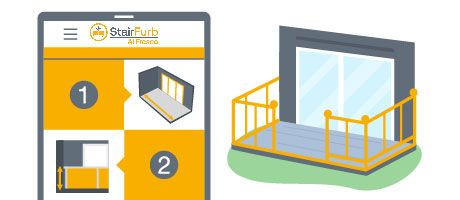
Measure your staircase using our online video tutorials and input them into our online configurator for a free, no-obligation quote. It takes less than 15 minutes.
 START DIY QUOTE

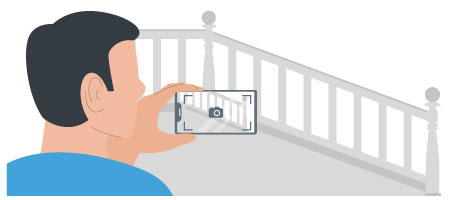
 GET PHOTO ESTIMATE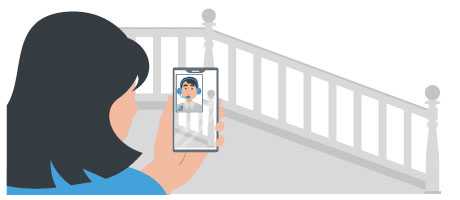
 BOOK CALL NOW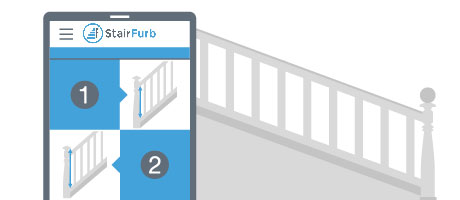
 START DIY QUOTE